From Discard to Luxury · Tony Motta
Tony MottaNew York · 2026
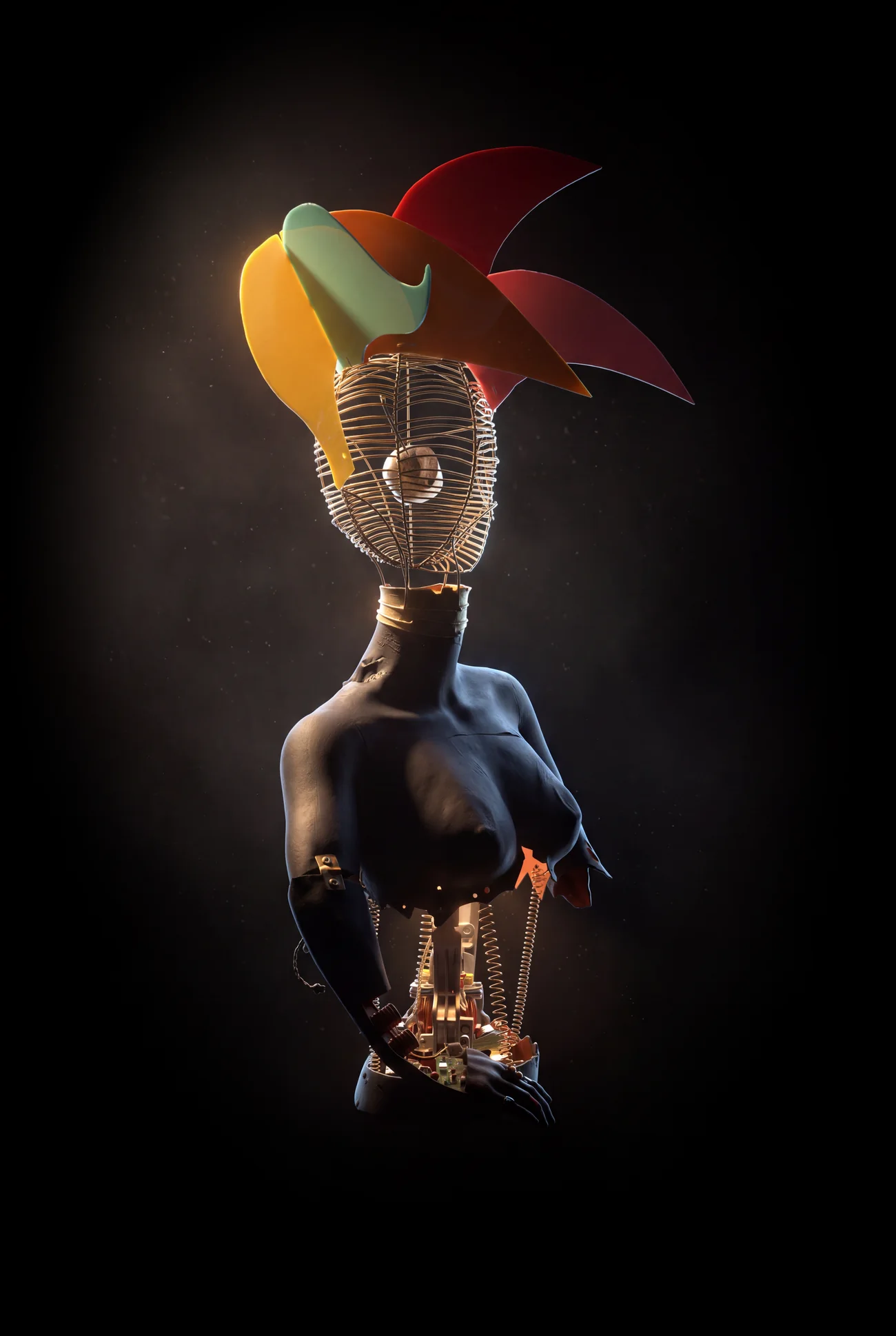
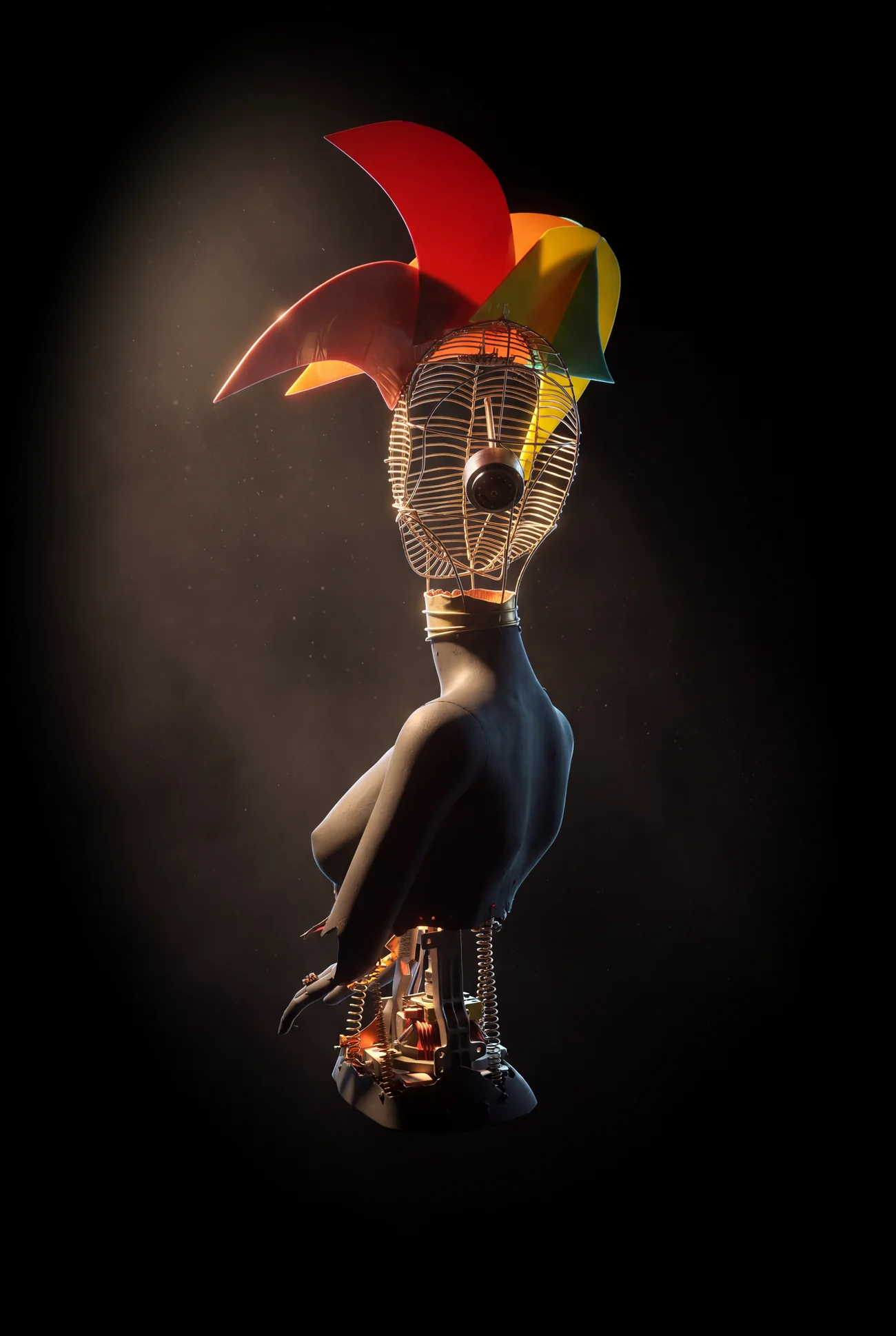
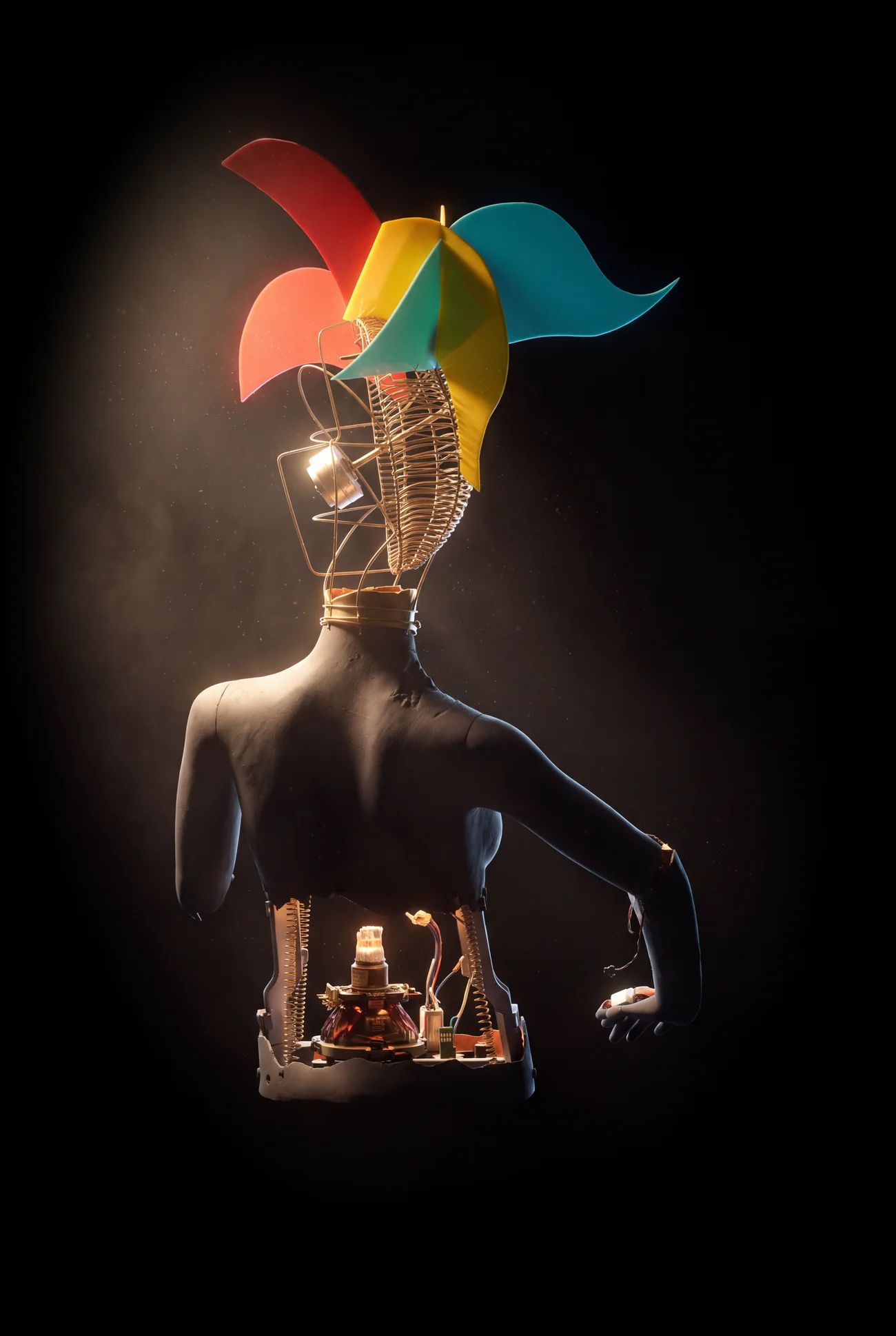
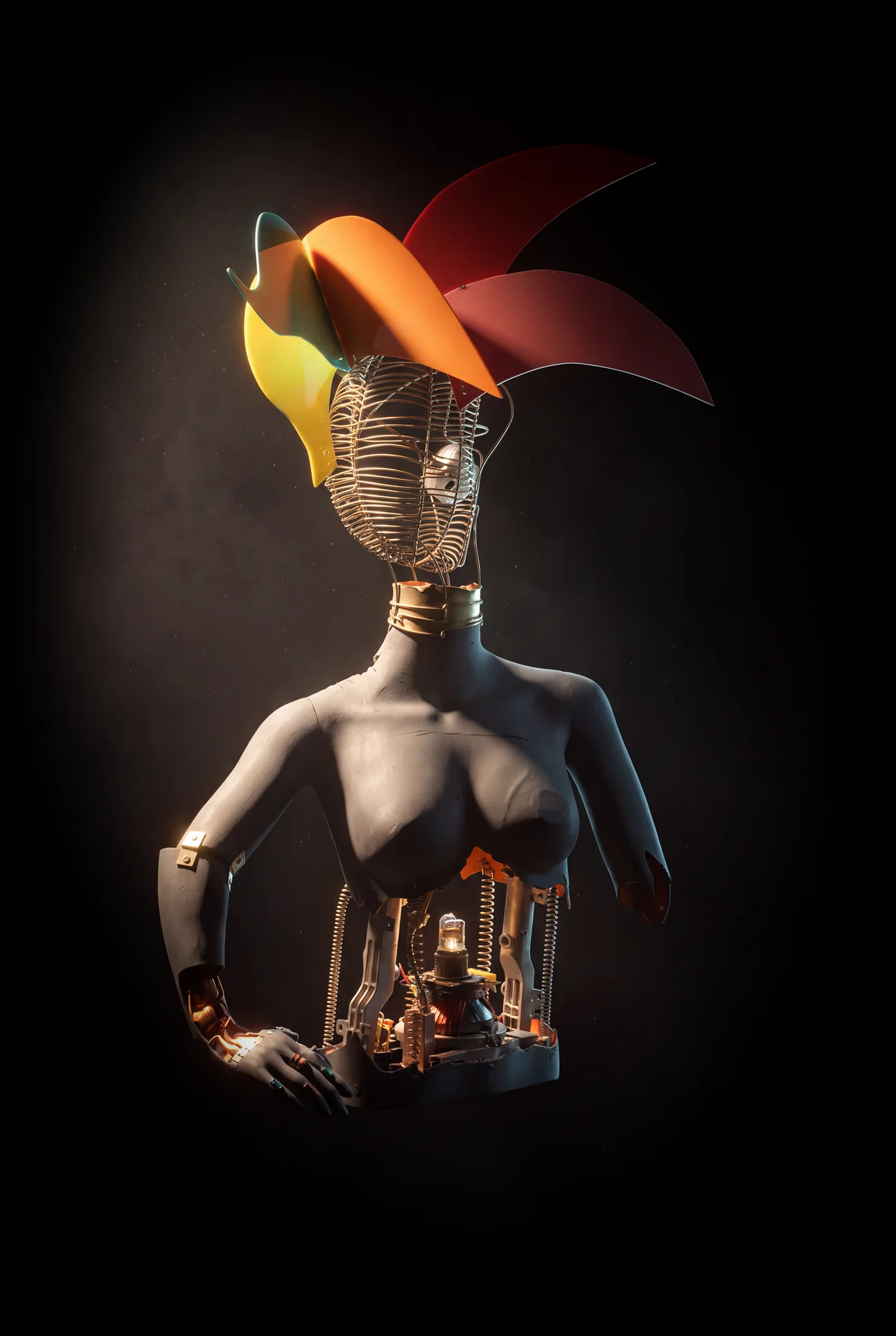
Sculpture I, from the front: a face of braided steel wire beneath a crown of colored acrylic petals, on a grey mannequin torso with exposed electronics Sculpture I, three-quarter view Sculpture I, in profile Sculpture I, from behind
Drag to turn her
Would you believe she came from the trash of New York? Sustainability.
01 / 04 · front
Sculpture I

Every sculpture holds a piece of a New York street.

The head came from one neighborhood. The arm, from another. The body, from a third.

Some of them plug in. The light comes from within.

Salvaged steel wire, a discarded mannequin, circuit boards, colored acrylic.

Sustainability · one of a kind

Chosen piece by pieceon the streets of New York.

Every part was found, redesigned, reworked, and given a new life. That is why each sculpture exists only once: the city never leaves the same piece on the same corner twice.

What the city throws away becomes art.

AI visualization of the sculpture's parts.
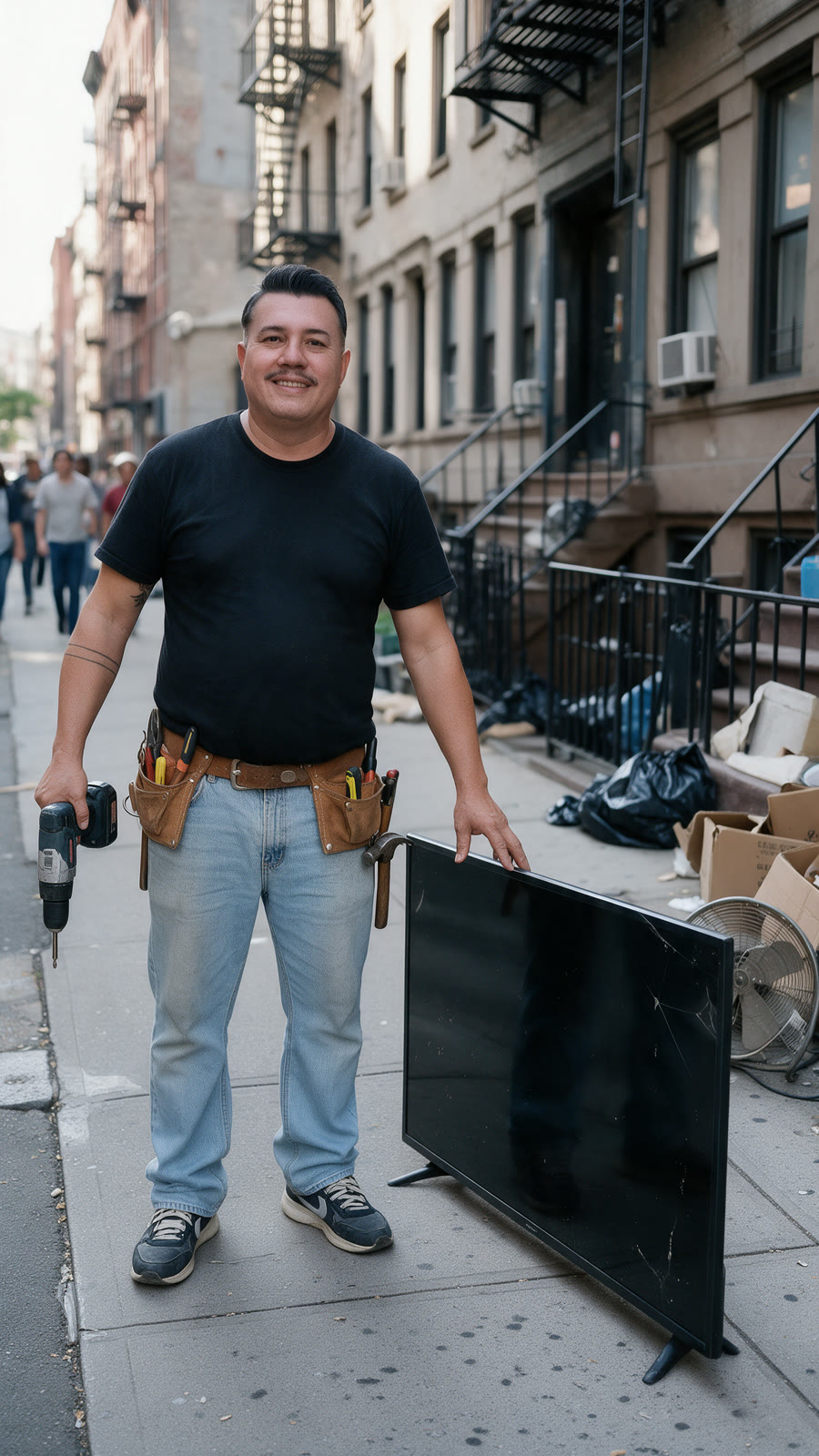
Tony Motta on a Lower East Side sidewalk by day, wearing a tool belt and holding a drill, resting his hand on a discarded flat-screen TV
Lower East Side, New York.
The origin

The boy who made toysfrom what the street threw away.

A wooden house, with gaps where the wind and the rain came in. Six children. In the morning, his mother mixed flour with water, because there was no bread.

There were no birthday parties. There were no presents. There was love, and plenty of it.

With no toys, the boy went to the street. A stick, a stone, a broken toy car: from whatever he found, he invented his own toys and his own stories.

That is where the artist was born. Hardship, which for so many becomes an excuse, became for him the spark of creativity.

Today, on the streets of New York, the gesture is the same: finding what someone left behind and giving it another life.

He would not change a thing about his childhood.

I · The street

It all beginsin the mind.

First the idea. Then the sketch. Only then the street: Queens, Brooklyn, Harlem, Manhattan, in search of the pieces that will, aesthetically, fit what he imagined.

“It is like a game. I have to search, and I have to find.”Tony Motta

Tony Motta sketching a sculpture on an iPad in the reading room of a New York library
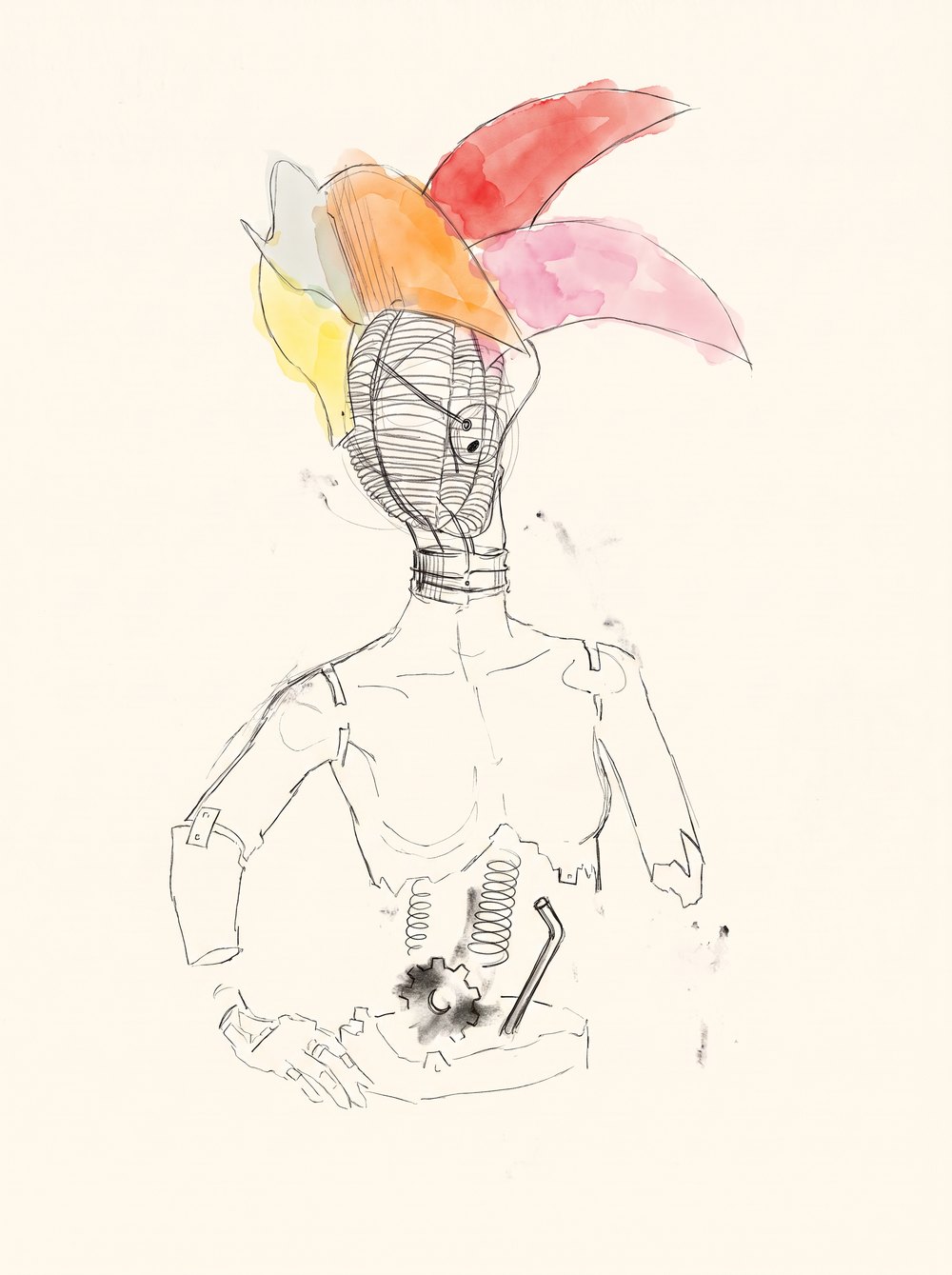
The sketch is born before the street.
A loose sketch of the sculpture: the wire-cage head with watercolor petals and the body in broken lines
The idea, on paper. The real piece comes from the street, and it is different.
II · The work is born

Raw, organic,made by hand.

He does not want art that is too perfect. He wants it raw, strong, organic, made by hand. A head comes from one neighborhood, an arm from another, the body from a third: every sculpture carries a piece of the city.

In the making, futurism meets romanticism, and the sculpture appears.

Tony assembles: board by board, wire by wire.
III · Four sculptures

Four sculptures.Each one exists only once.

One-of-a-kind pieces, made from what New York threw away. Each is born of Tony Motta's creative, visionary approach to sustainability, and there is no other like it in the world.

Sculpture I
Sculpture II
Sculpture III
Sculpture IV
In the studio

The same sculptures,at the scale of a table.

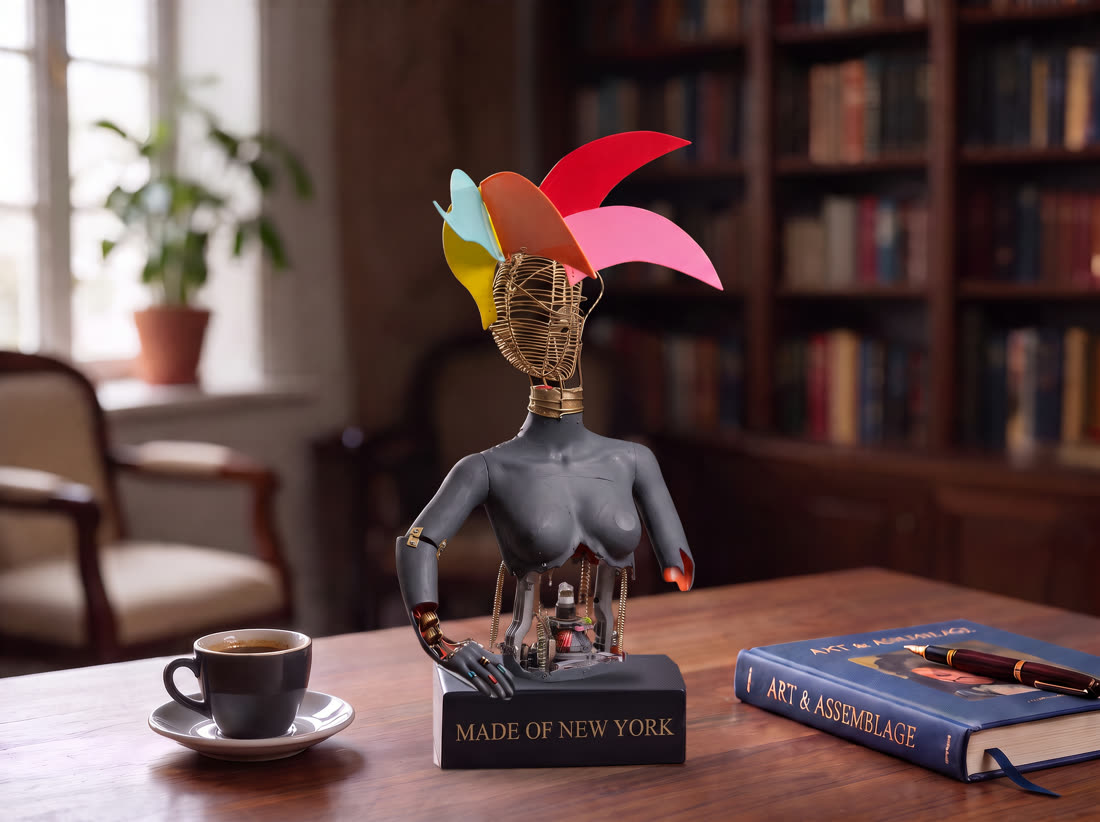
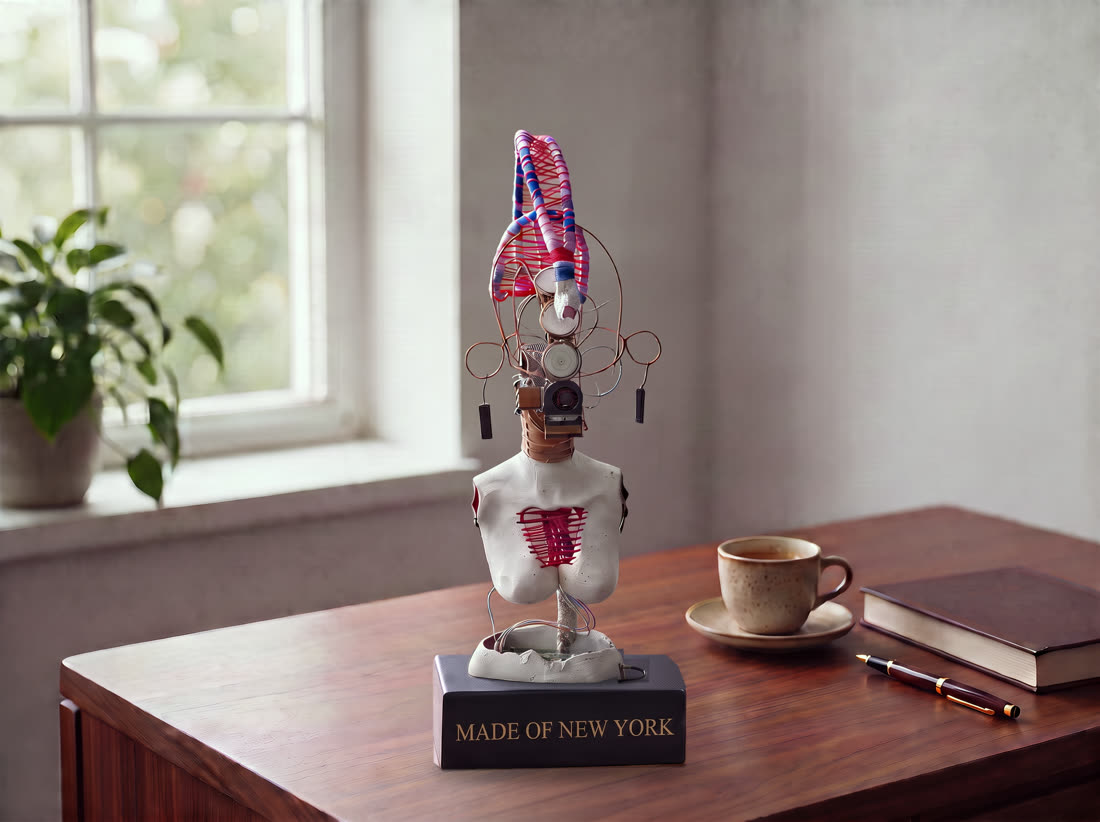
Small edition of Sculpture I on a walnut desk
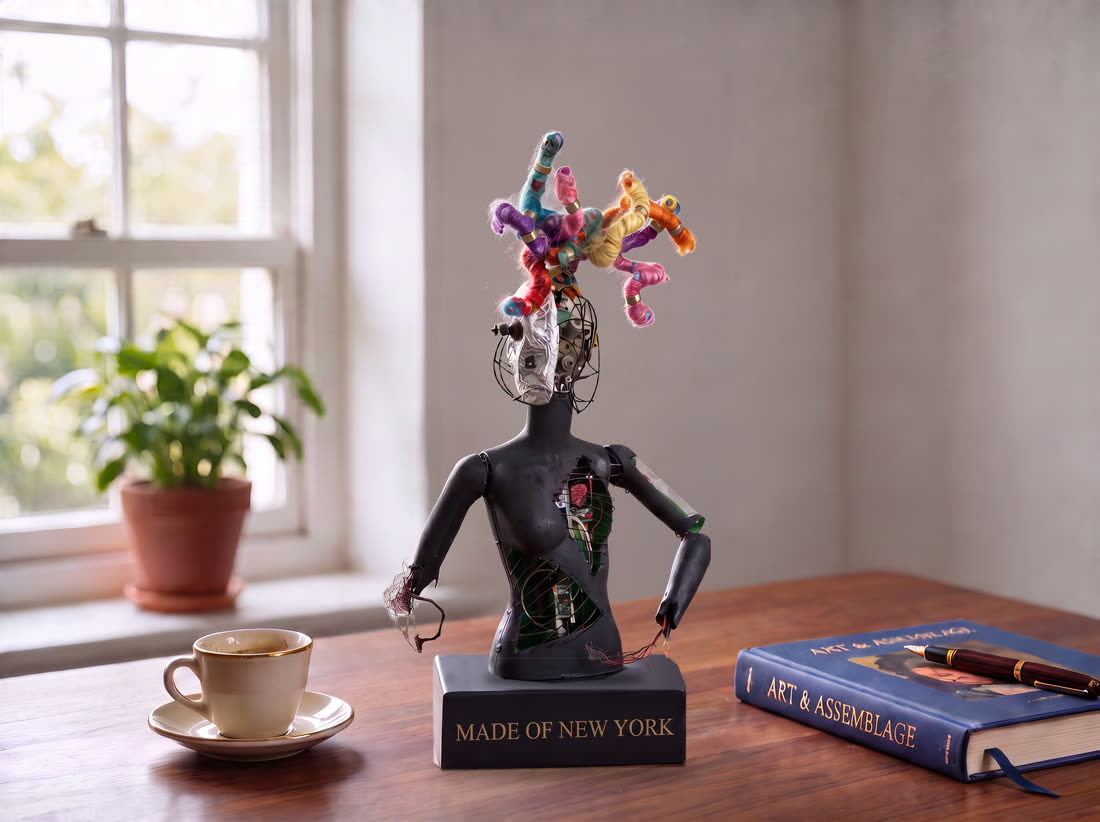
Small edition of Sculpture II, with the colorful dreads, on a walnut desk
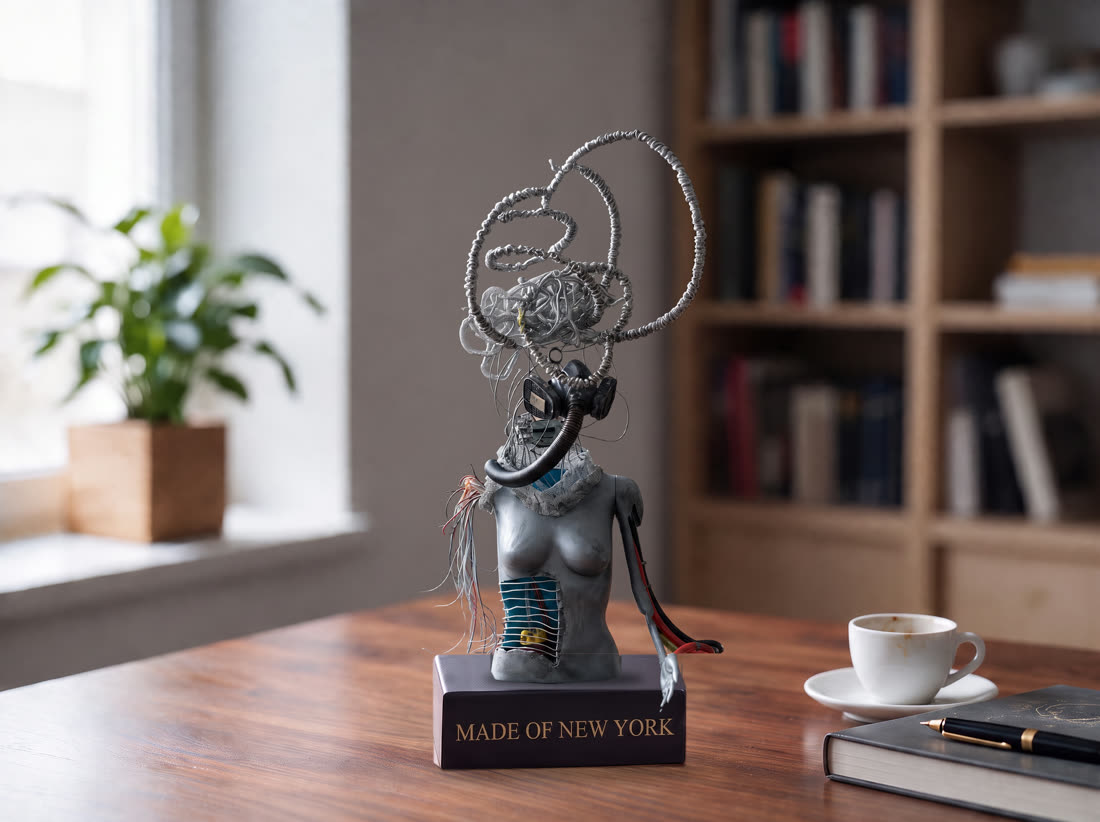
Small edition of Sculpture III, with the wire crown, on a walnut desk
Small edition of Sculpture IV on a walnut desk

Only 25 of each will be made, and then they will never exist again. Each one 3D-produced, painted by hand and lit from within, to carry the same essence as the originals.

Concept image. The pieces are still being made.
CaringKind · Forget Me Not Gala · New York, 2024

From the trash of New York to its grandest ballrooms.

Organizations invite Tony to bring art and sustainability to their galas. The sculptures leave the trash behind and arrive in Manhattan's most luxurious ballrooms: they belong in any setting.

IV · The paintings

A painting thattells its own story.

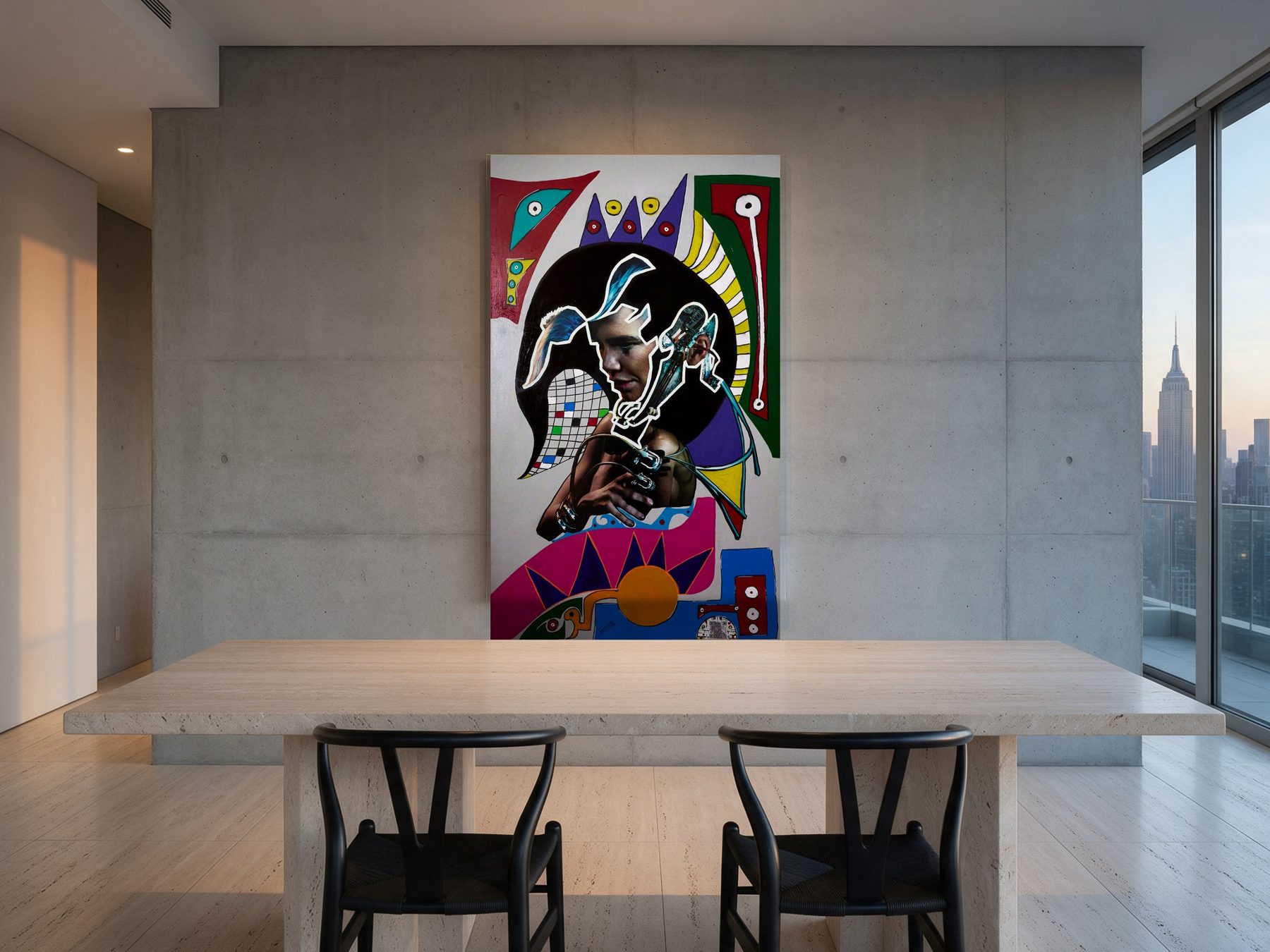
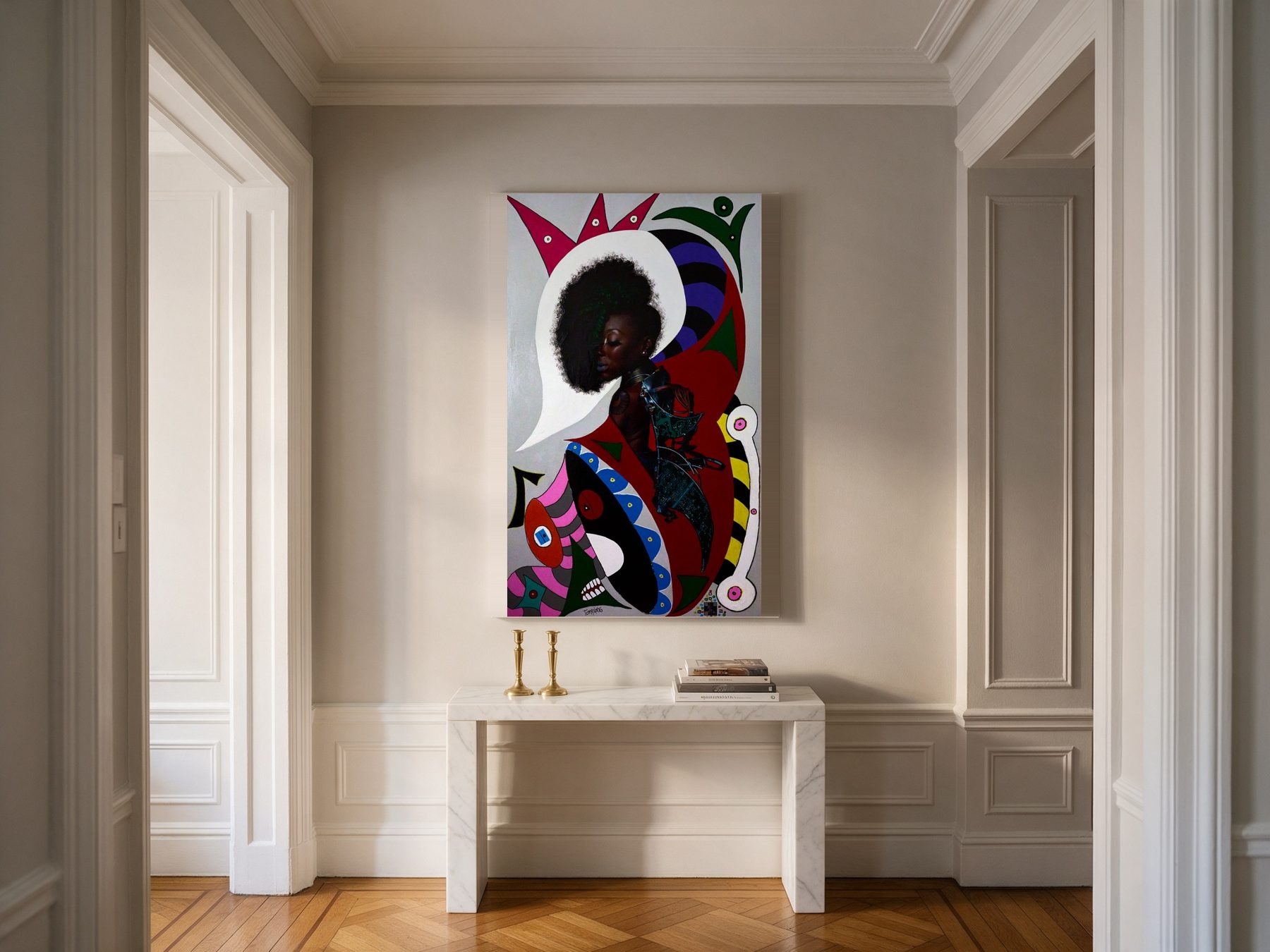
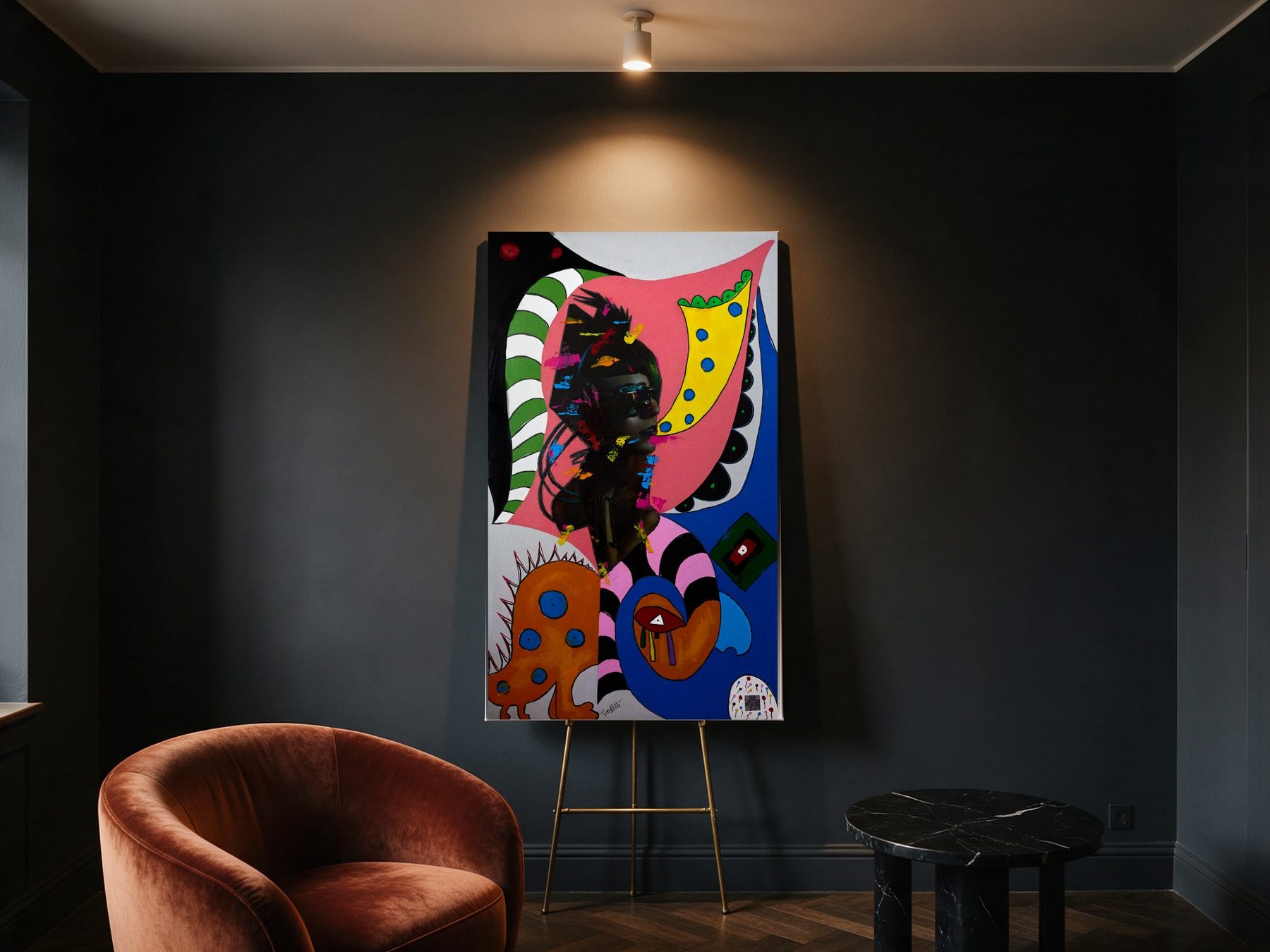
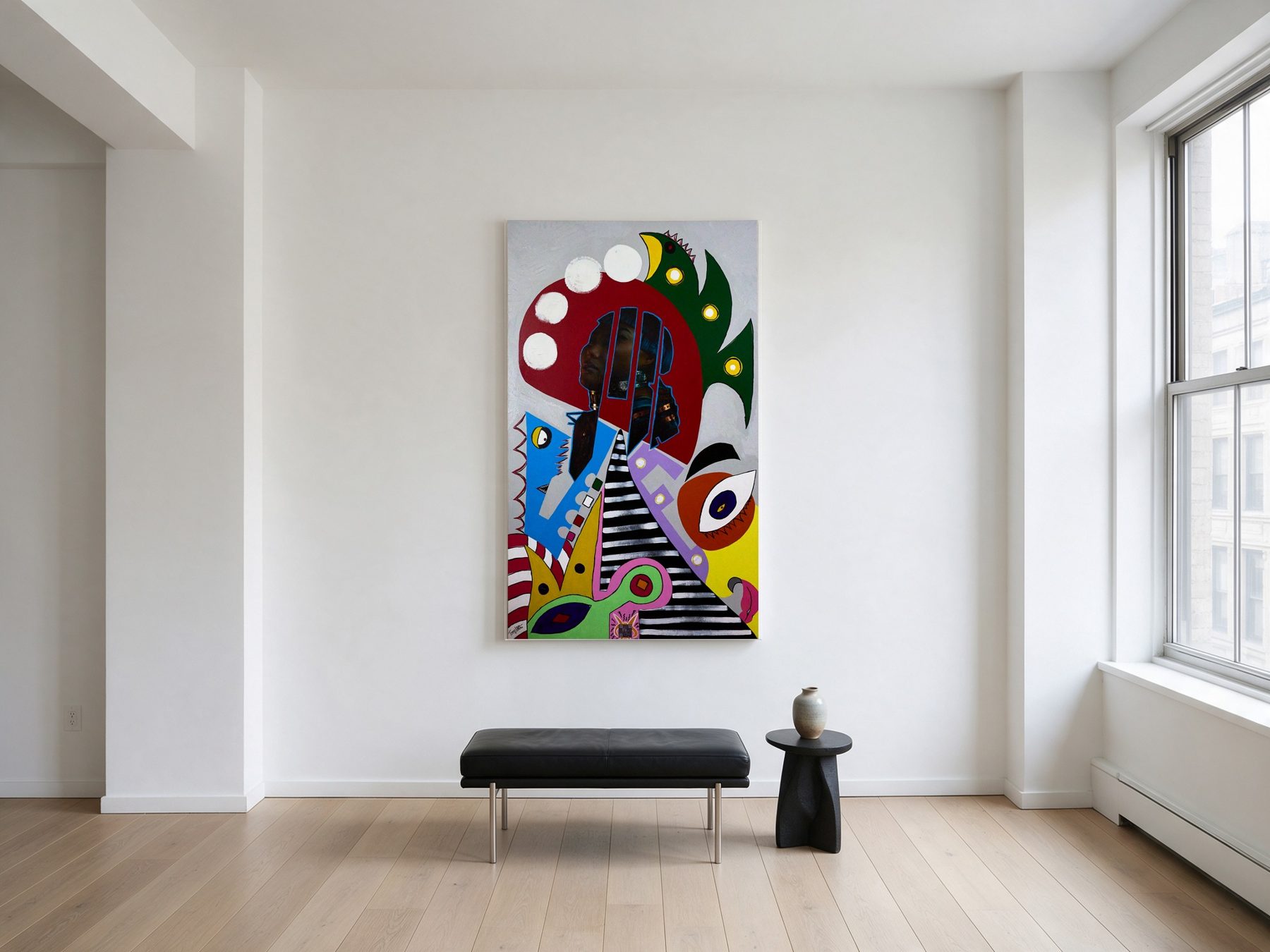
A real model. Accessories built from the city's electronic waste. A photograph taken apart, rebuilt as a mosaic and painted by hand in acrylic.

A painting on a concrete wall above a dining table, with Manhattan through the window
A painting in the classic entrance of an Upper East Side apartment
A painting on an easel in a dark room with a velvet armchair
A painting in a white loft, above a black bench

Rooms created with AI. Each painting is a photograph of the real canvas.

01The model and the look
02Accessories from electronic waste
03Photographed on the streets of New York
04Taken apart, rebuilt, painted by hand

Every canvas hides a QR code. Point your phone at it, and the painting shows how it was made.A short documentary inside every work

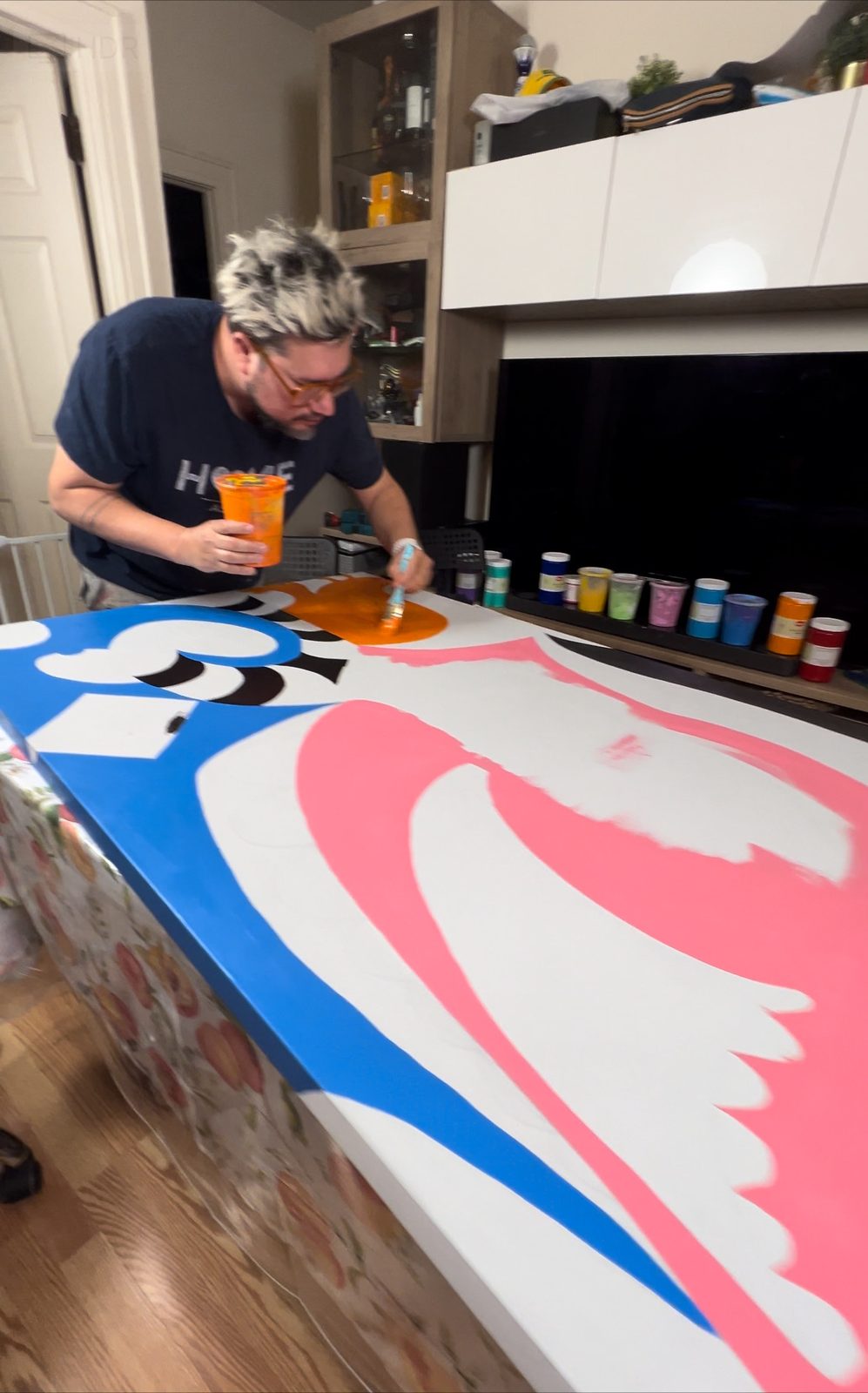
Tony painting a large canvas on the floor
On the floor, by hand.
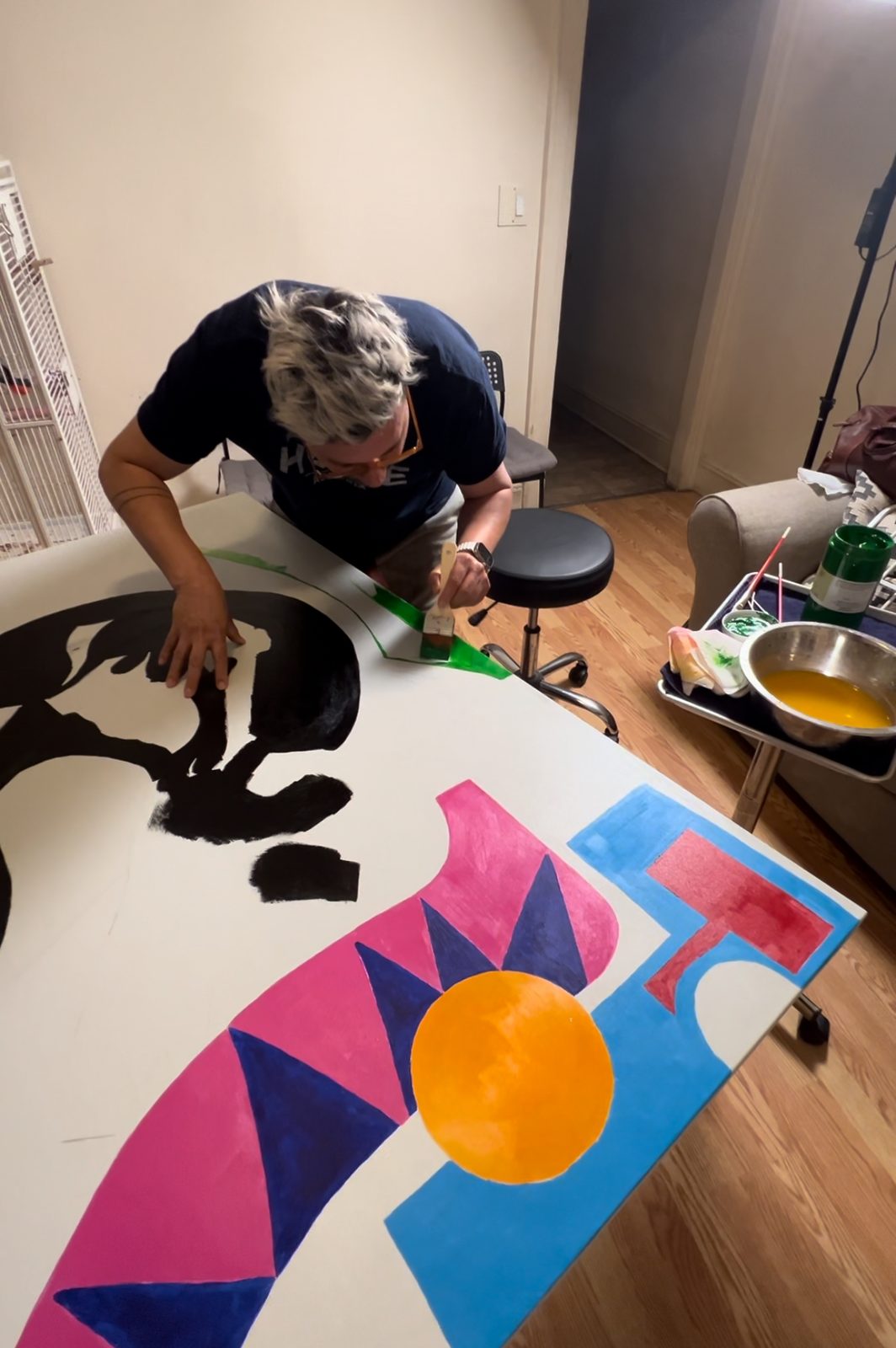
Tony painting black shapes on a canvas
Color, up close.
V

Recycledhaute couture.

Gowns created from bubble wrap, trash bags, chicken wire and industrial foam.

The dress does not matter. The woman does.

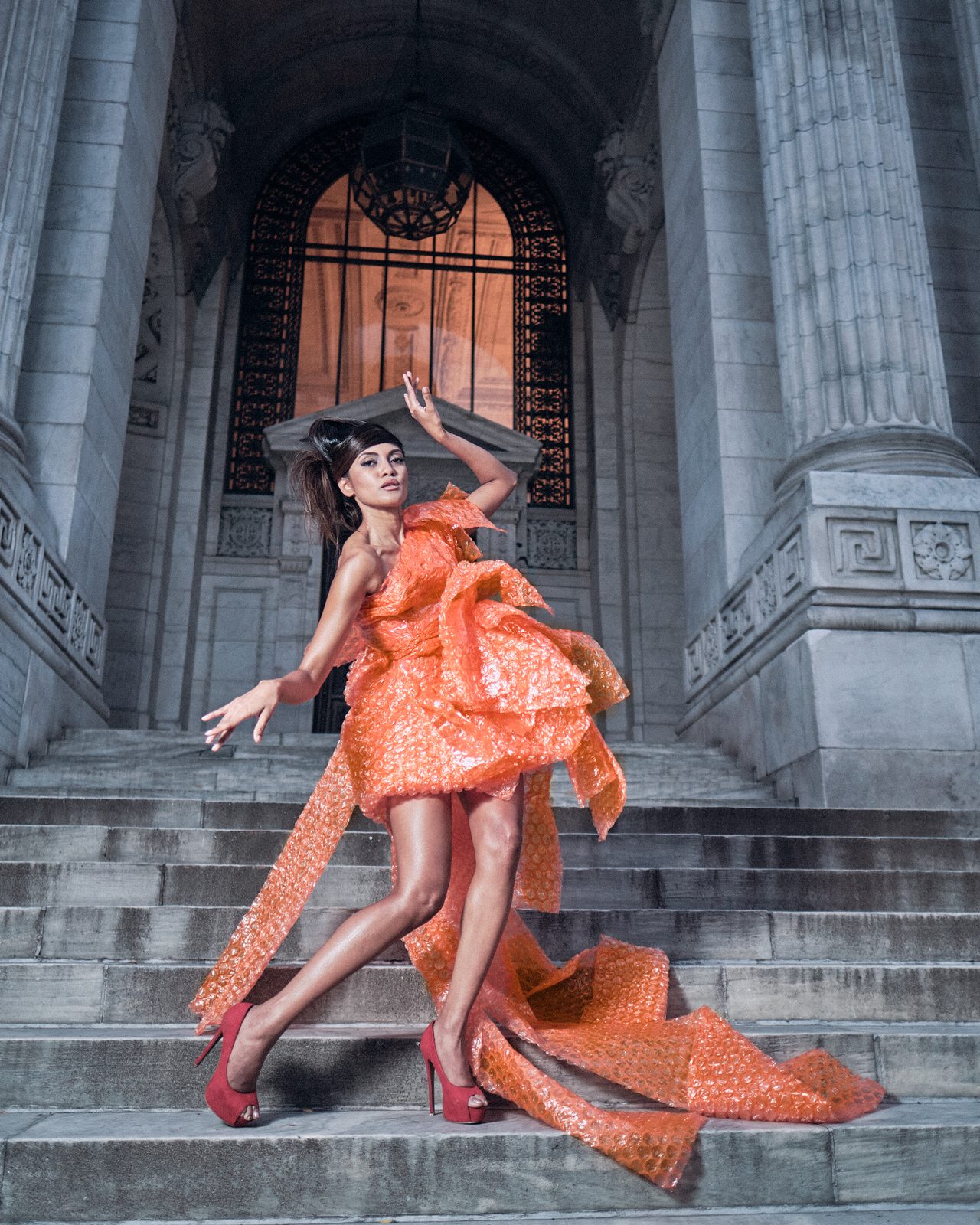
Bubble wrap · on the steps, at night
Black bags · at the bronze doors
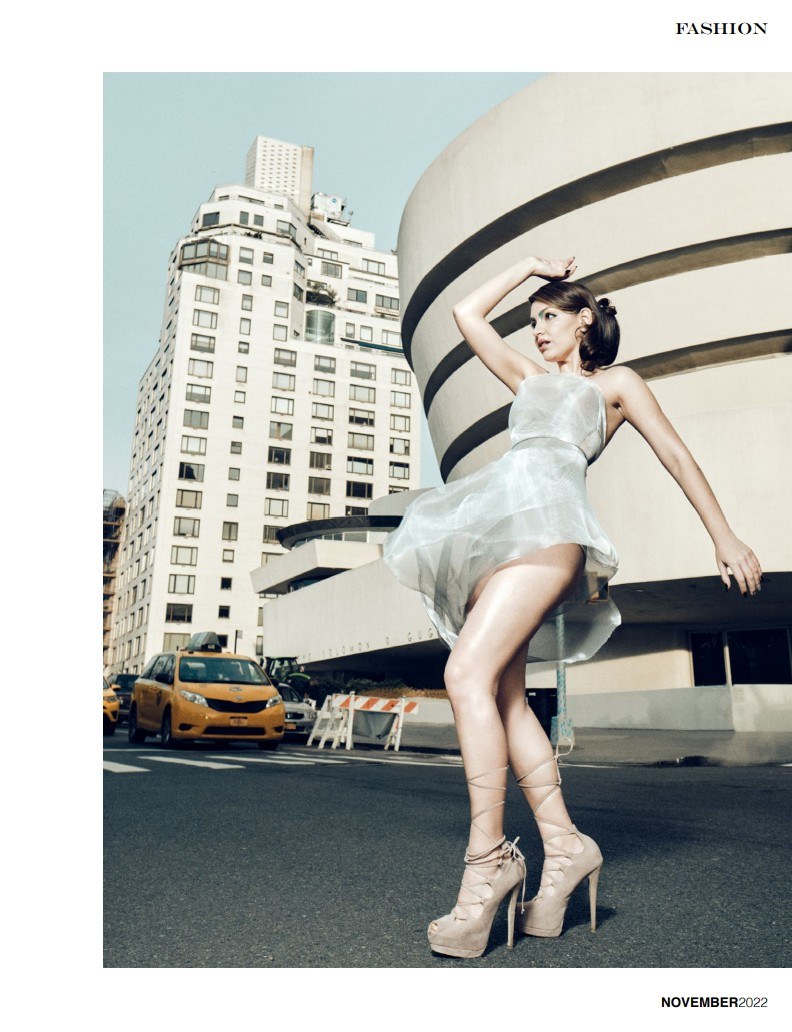
White gown · Guggenheim, Fifth Avenue
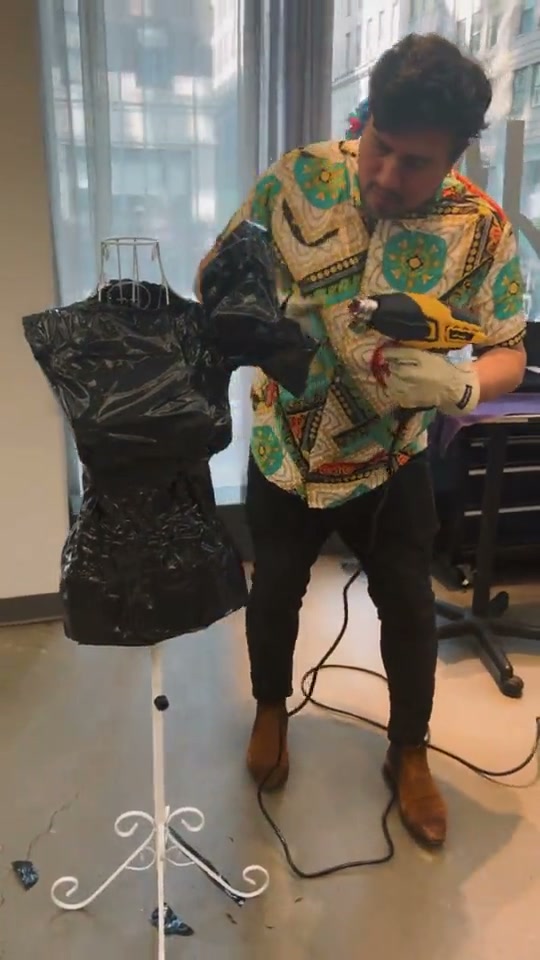
Tony building a gown of black bags on a mannequin, with a heat gun
The gown is born in his hands.
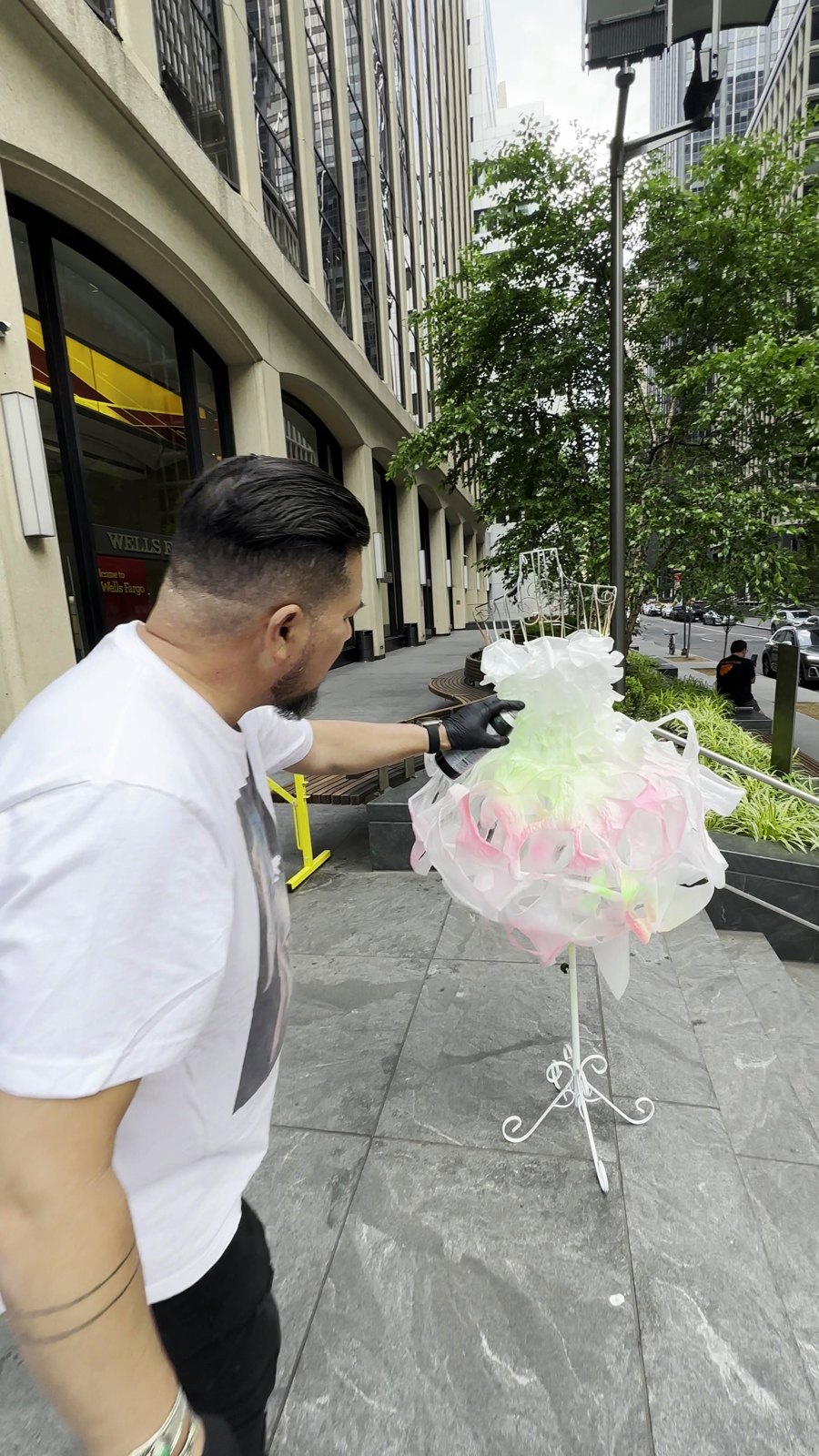
Tony spray-painting a gown on the sidewalk
Spray paint, on the sidewalk.
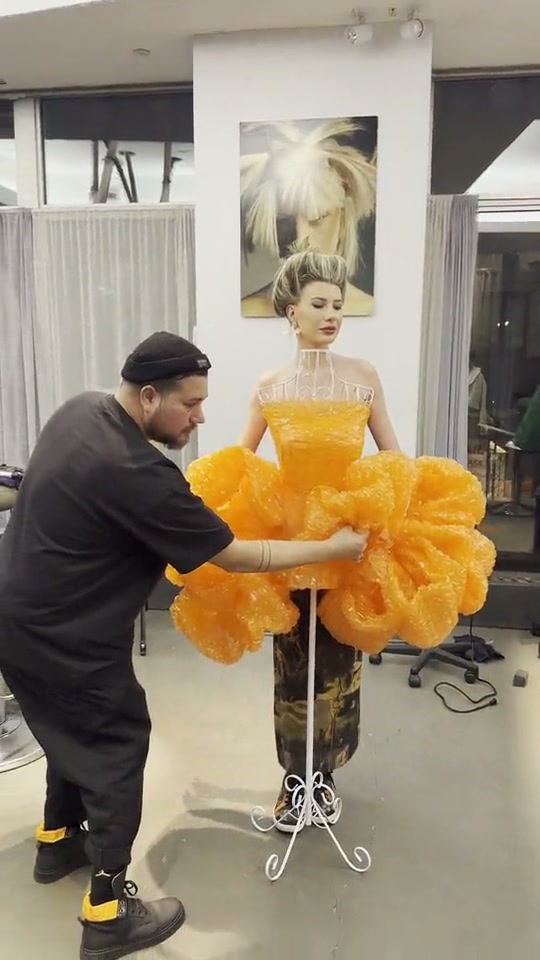
Tony fitting the orange gown on a mannequin
Bubble wrap becomes haute couture.

“She can wear a thirty-thousand-dollar gown, or a gown made of trash bags, and feel wonderful. Because everything depends on the eye of the one who sees, and of the one who wears it.”Tony Motta

Bubble wrapBlack bagsChicken wireIndustrial foam

Each one is unique. There is no other like it in the world.

The orange gown in motion on the steps
VI · Living sculptures

The sculpturethat walks.

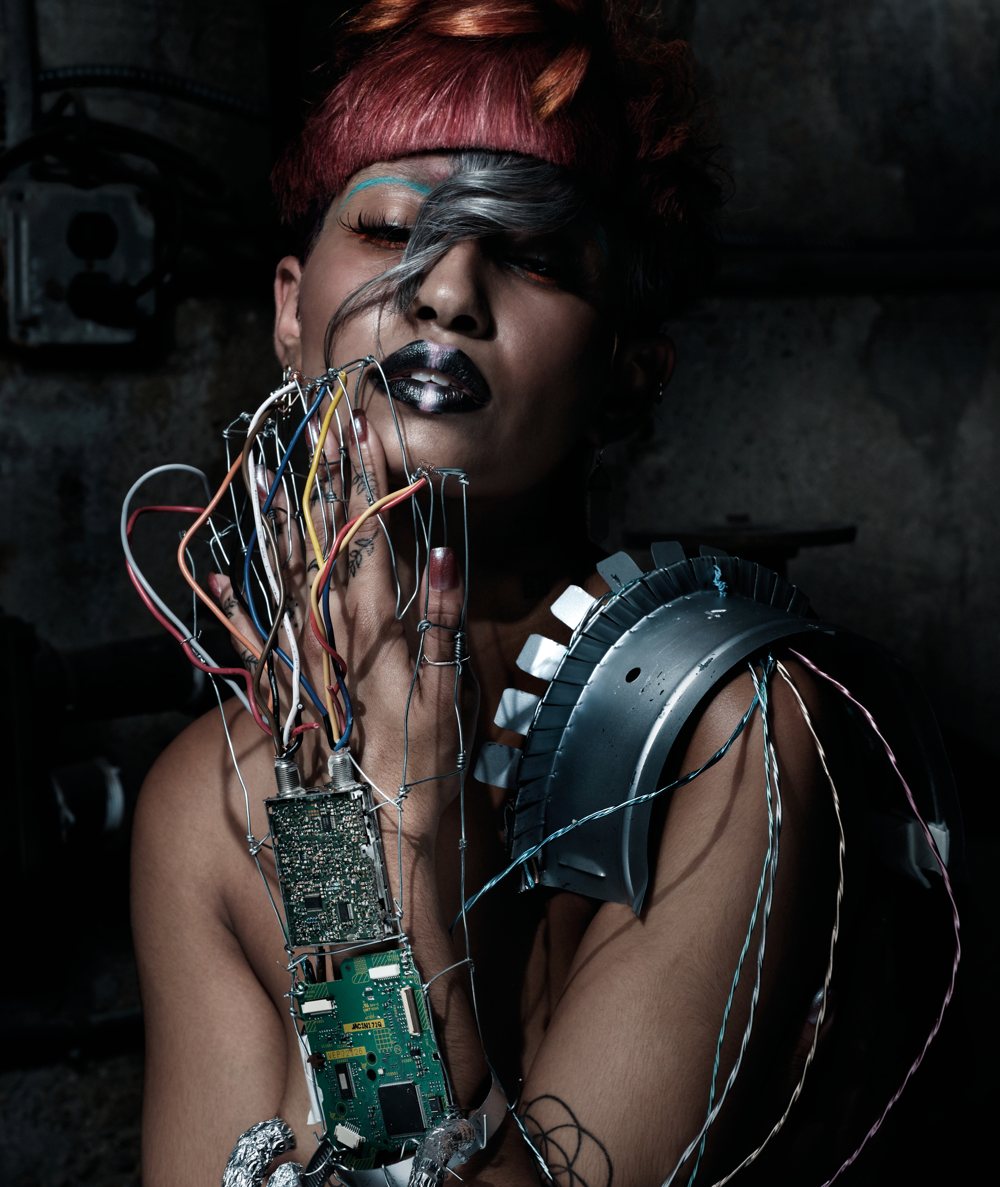
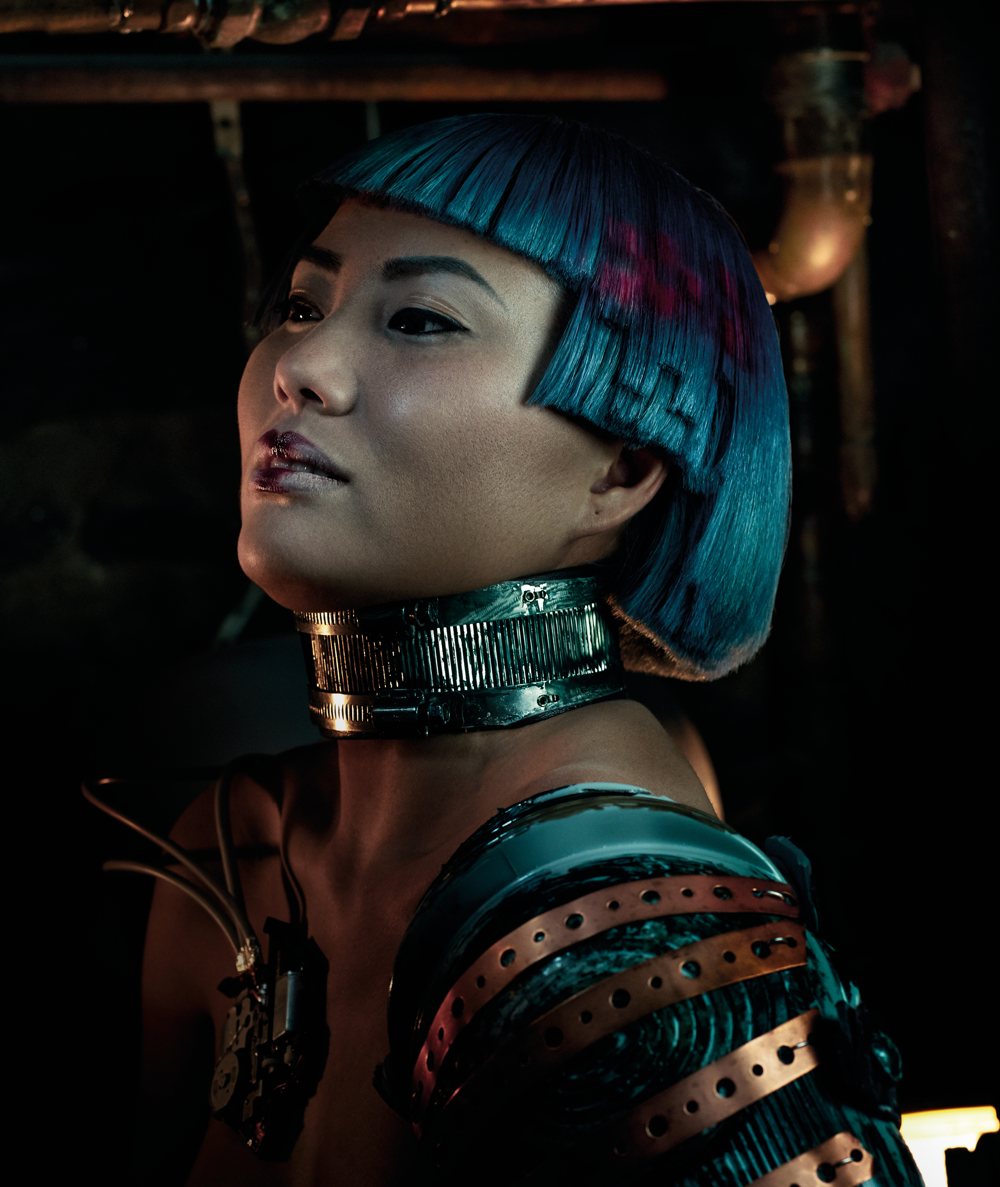
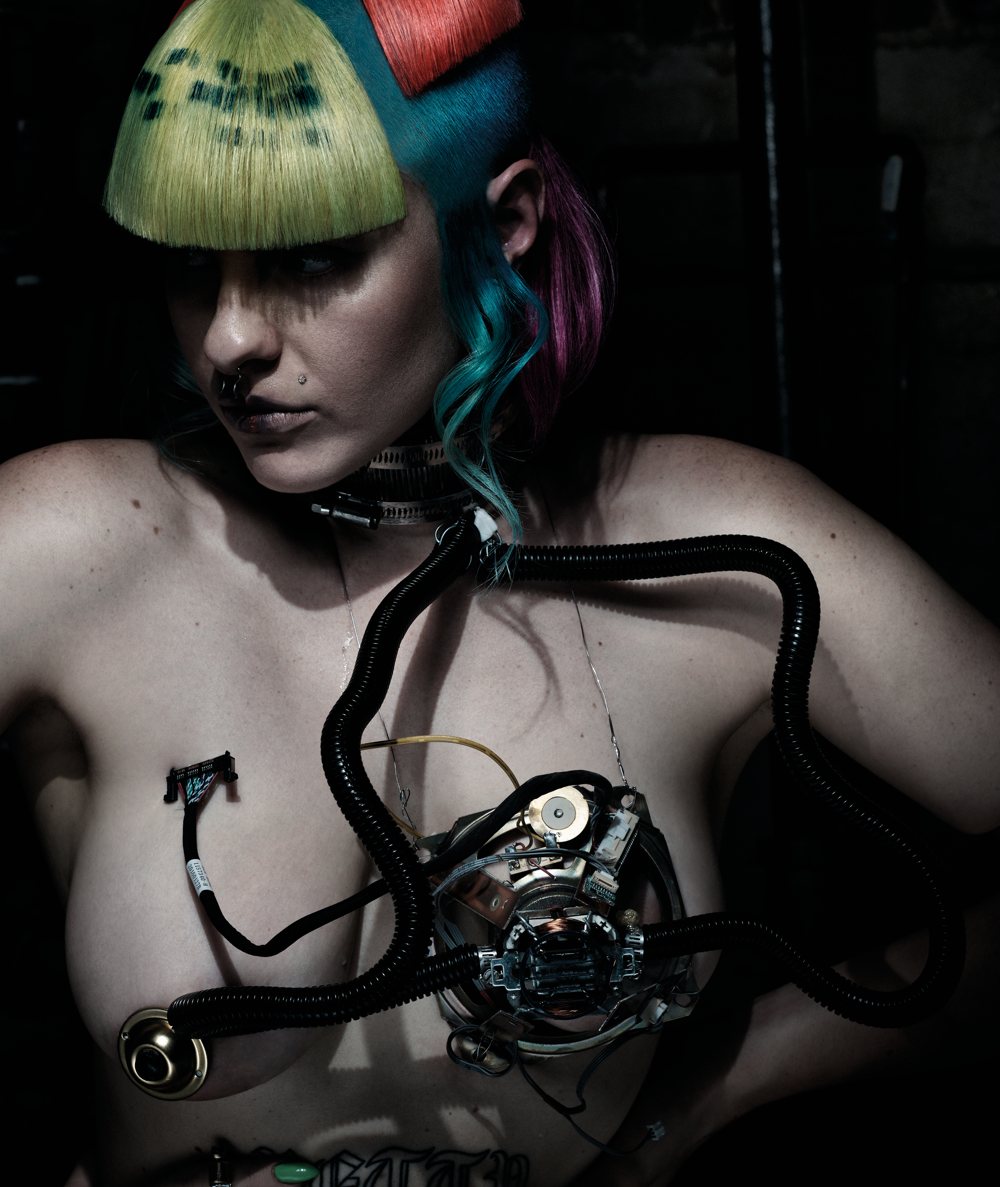
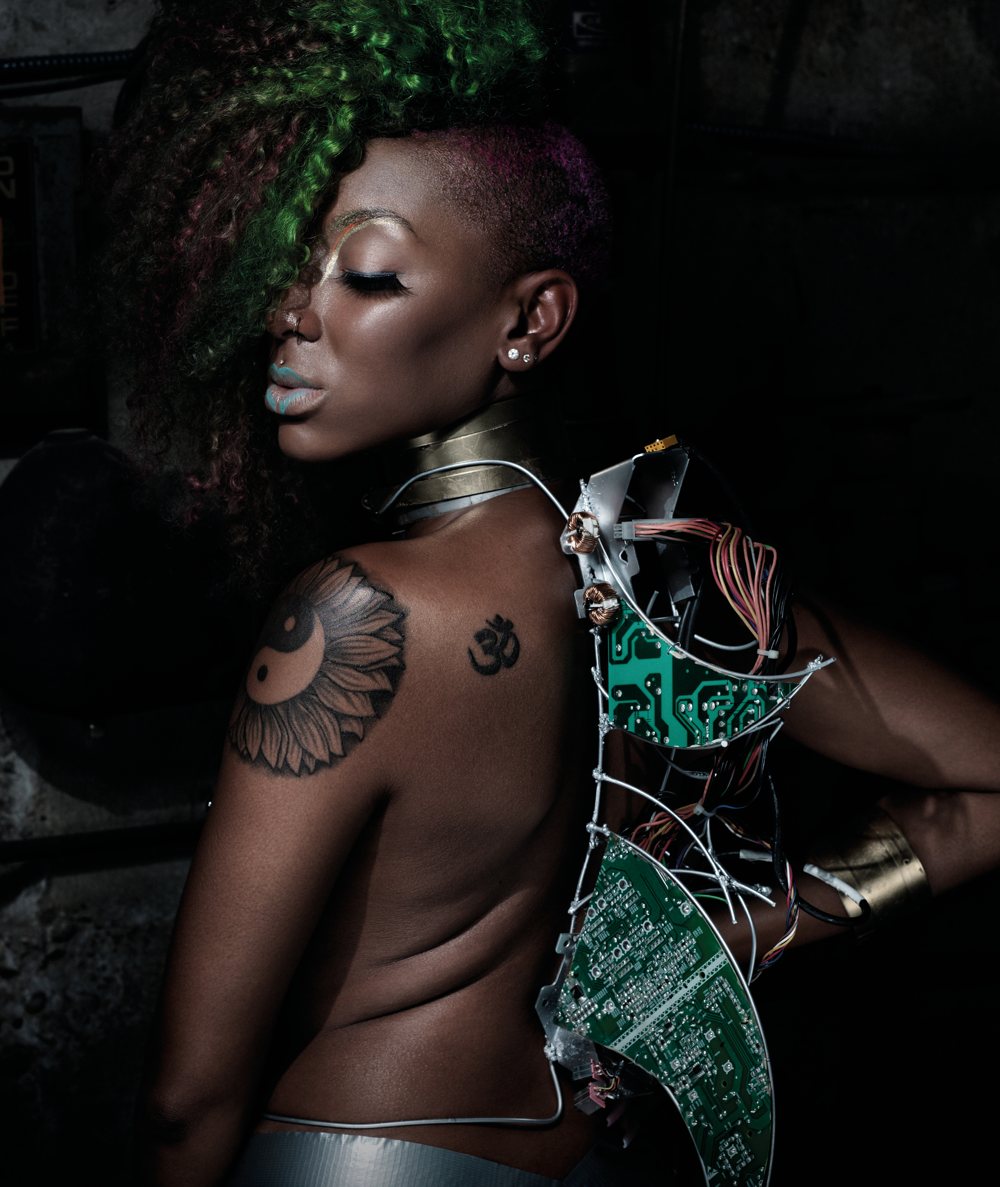
The same work, worn by women of flesh and blood: the city's electronic waste upon the body.

A model with a metal lens over one eye and an armband of tubes
A model with circuit boards and wires over her hand and shoulder
A model with a metal collar and armor of copper ribbons
A model with black tubes and a metal piece over her chest
A model seen from behind, with green circuits over her shoulder
In the press

Seen in New York.

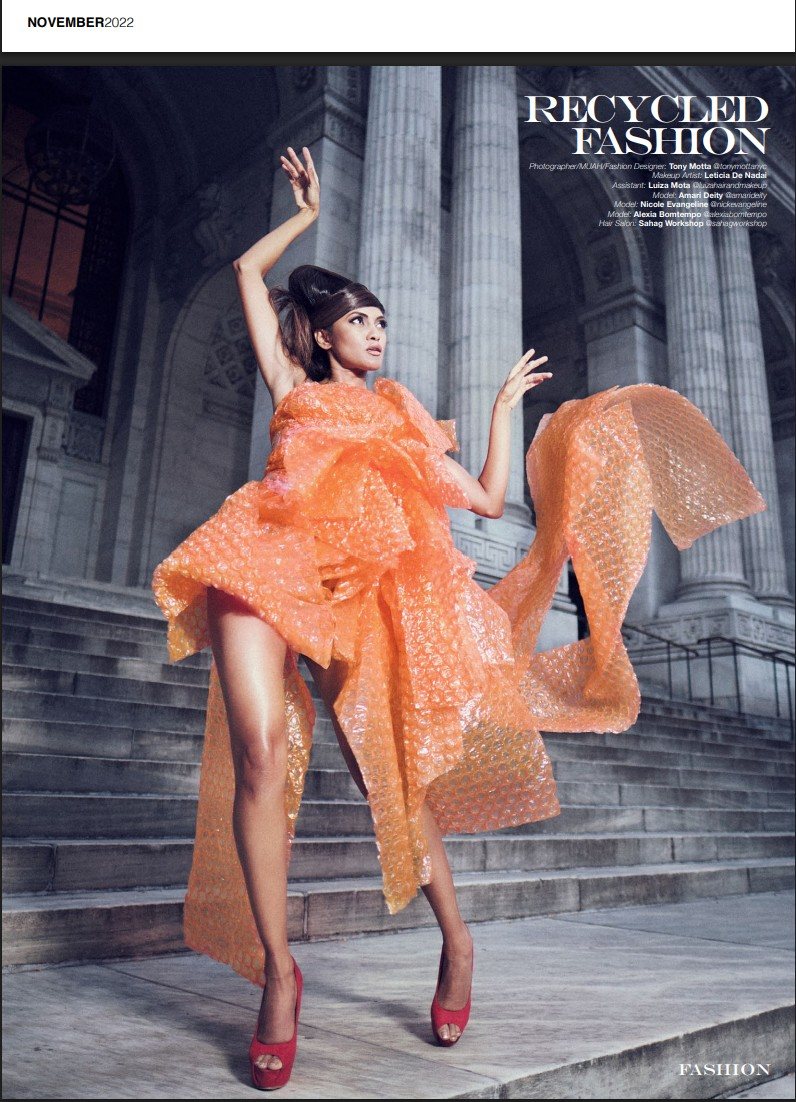
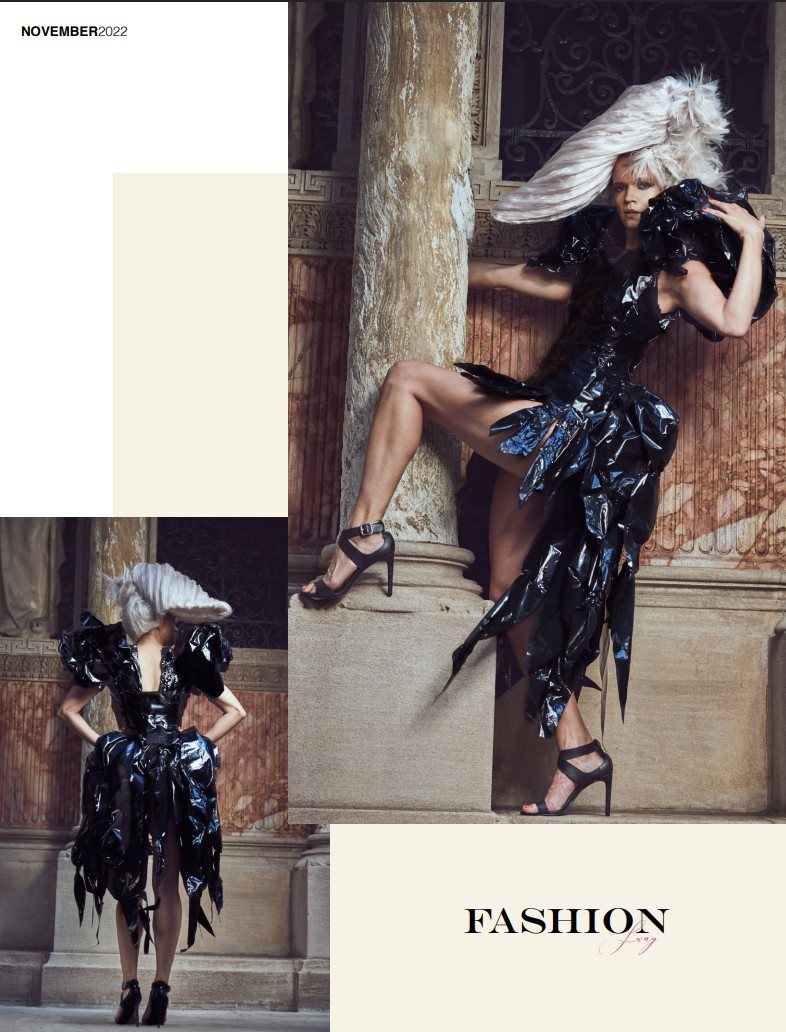
Fashion Style Magazine page, Recycled Fashion: a model in the orange bubble-wrap gown on the steps
Fashion Style Magazine · November 2022 · “Recycled Fashion”
Fashion Style Magazine page with the black trash-bag gown
Fashion Style Magazine · the trash-bag gown
Fashion Style Magazine page: a model in the steel-mesh gown in front of the Guggenheim
Fashion Style Magazine · the steel gown, before the Guggenheim
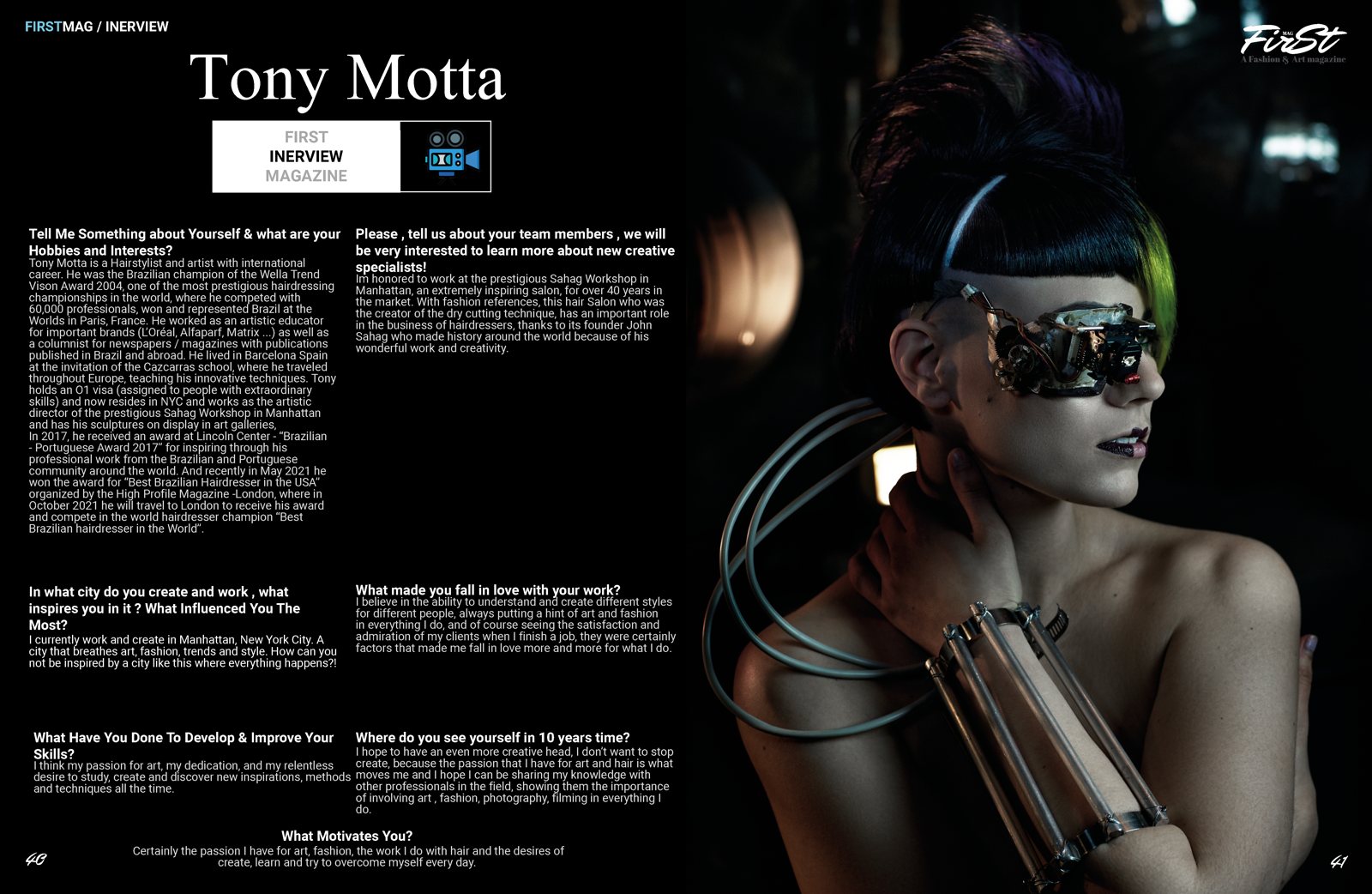
Tony Motta's interview in First Magazine, with one of the models from the avant-garde collection
First Magazine · May 2021 · the interview and the avant-garde collection
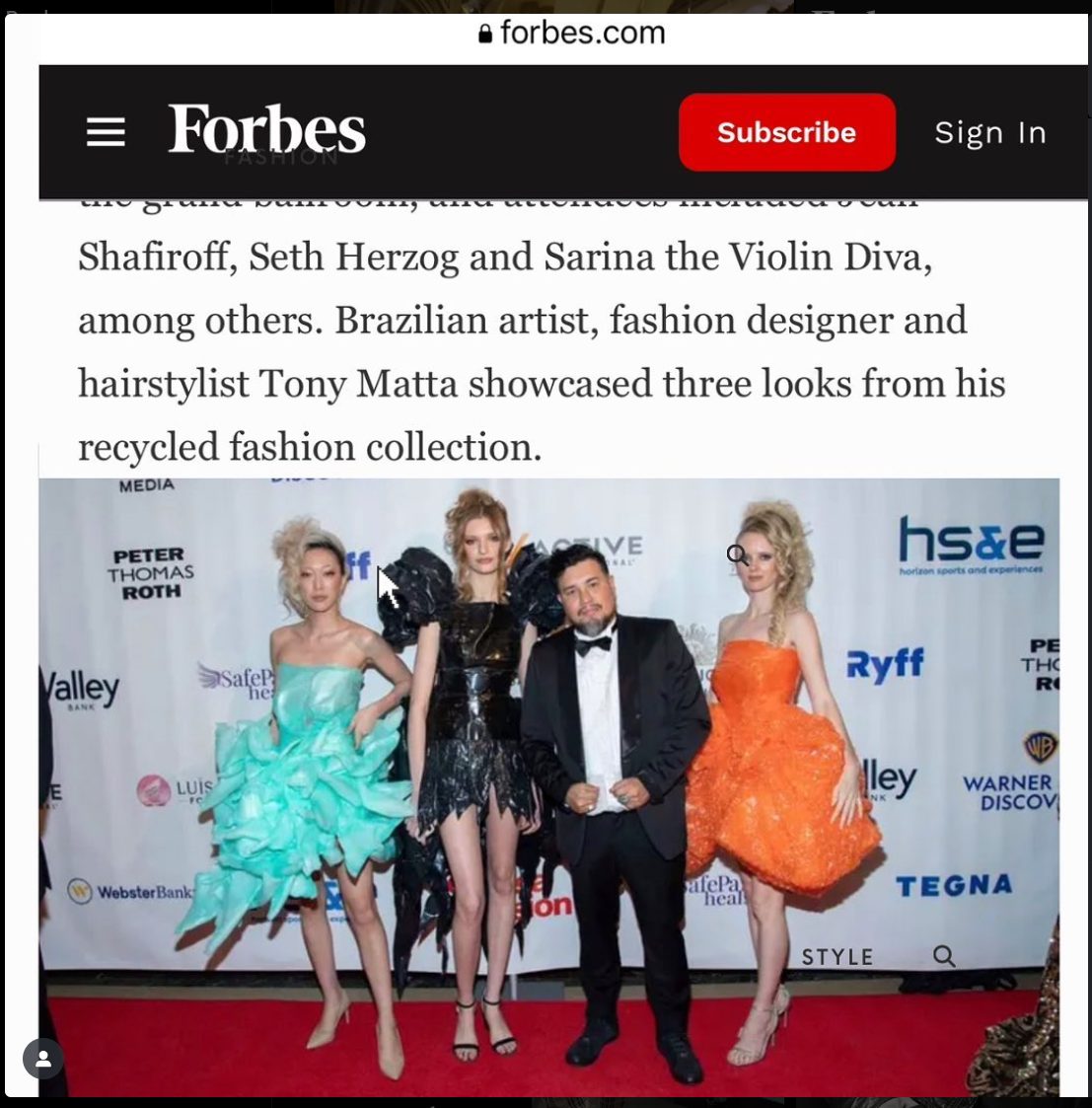
Forbes article citing Tony Motta's recycled fashion collection
Forbes · as a designer, for recycled haute couture · MAG Gala, The Plaza, June 2023
Beside those who care

Art in serviceof causes that care for people.

CaringKind

Eleonora Tornatore-MikeshPresident & CEO

In New York, it supports families and caregivers of people living with Alzheimer's and dementia.
Gerando Falcões

Edu LyraFounder & CEO

Tatiana AlonsoCEO · Gerando Falcões International

In Brazil, a network of NGOs working to lift the favelas out of poverty within a generation.

Luisa Diaz Foundation

Luisa DíazFounder · MAG Gala

The MAG Gala, at The Plaza, raises funds for women who survived domestic violence and human trafficking.

“The stage changes. The intention does not.”Tony Motta

There is more. It is easier to show in person.

The artist

Tony Motta. Born in Vitória, Brazil. Self-taught. A multidisciplinary artist, working in New York.

The work

Sculpture, recycled haute couture and painting, made from what the city throws away.

Contact

hello@tonymotta.com

+1 (917) 651-8965

New York, 2026.